Are overflowing gutters normal in heavy rain? When to clean them and what it costs near Seattle
Usually not. Gutters are meant to carry rain off the roof without spilling, so water pouring over the edge most often means a clog in the gutter or the downspout. A short spill below a roof valley in a real downpour can happen even when everything is clear. Seattle Public Utilities advises cleaning gutters at least twice a year, and FixerUp's gutter cleaning is a fixed $199 before tax for a home under 3,000 square feet.
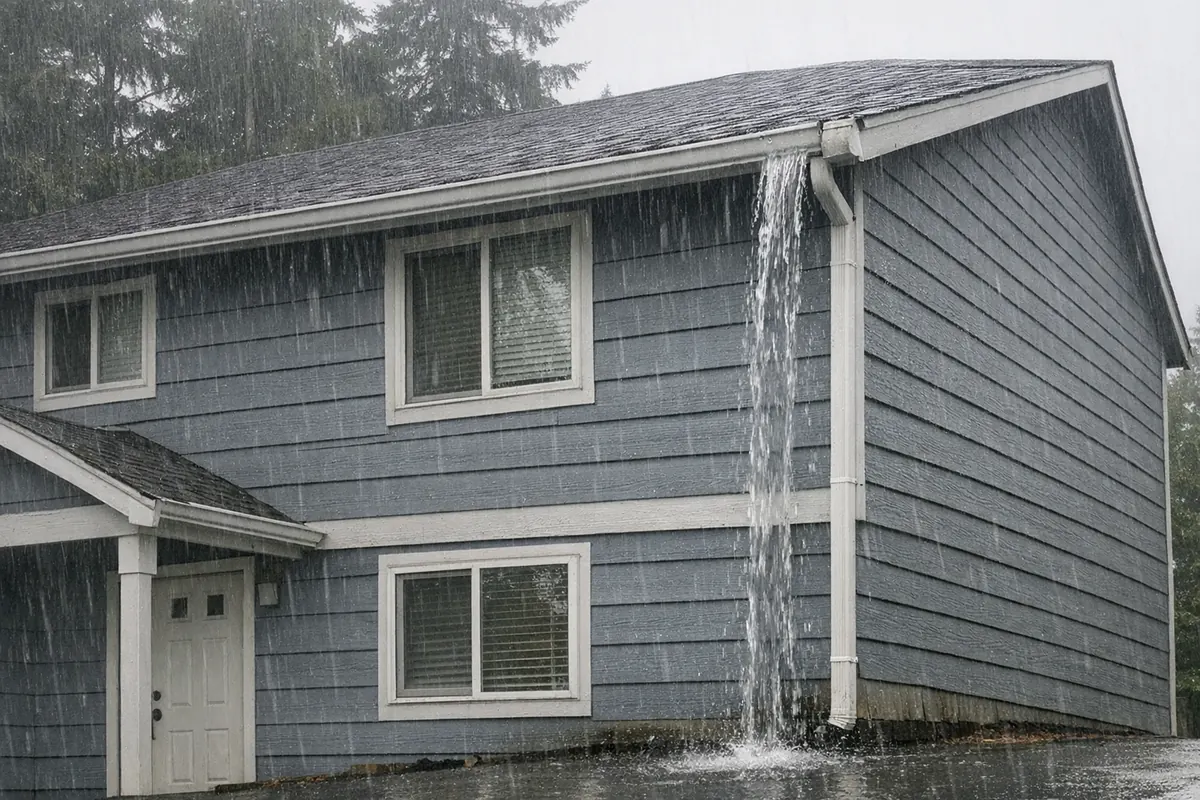
I'm Fixa. By late November around Puget Sound, the leaves are down and the rain is steady. If a sheet of water is coming off the corner of your house, here's how to tell what you're looking at and what to do about it.
Is it ever normal for gutters to overflow?
Sometimes, briefly. InspectAPedia, a building-inspection reference, lists the reasons a gutter can overflow even when it's clean:
- A roof valley above it. Overflow is most common below valleys, where two roof slopes send a lot of water to one spot in heavy rain.
- Gutters too small for the area of roof they drain.
- Too few downspouts on a long run.
- The wrong slope. A gutter that has sagged or was hung too flat fills up when it should be draining.
As a rule of thumb, the difference is in the pattern. A clean gutter with one of these problems spills in the same spot, only in the hardest rain. A clogged gutter spills along its length, in ordinary rain, and gets worse through the season. If yours were cleaned recently and still overflow, cleaning again won't fix it. That needs someone to look at the size, slope, and downspouts.
How can I tell from the ground whether mine are clogged?
You don't need a ladder for this.
- Watch in the rain. State Farm's home-maintenance advice is to check after at least 15 minutes of heavy rain. Water spilling over the sides points to a clog, often in the downspout.
- Look at the downspout. If the gutter is spilling while only a trickle comes out the bottom, the blockage is in or above the downspout. InspectAPedia notes that even a small handful of leaves can block the opening where gutter meets downspout.
- Look for gaps and sag. Daylight between the back of the gutter and the board it hangs on, or spikes working loose, means the gutter is pulling away.
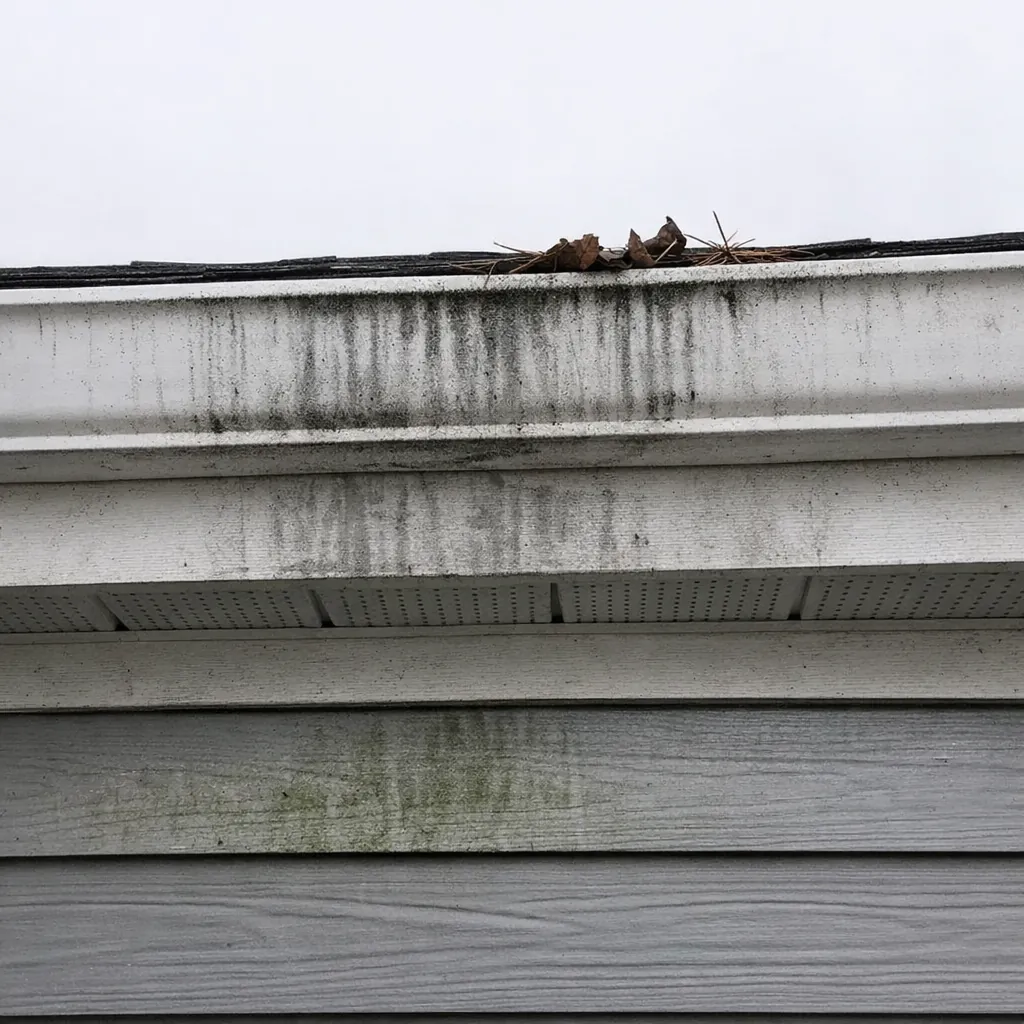
- Look below it. Dark streaks down the gutter face and green staining on the siding underneath suggest water has been running over for a while.
What happens if I leave it?
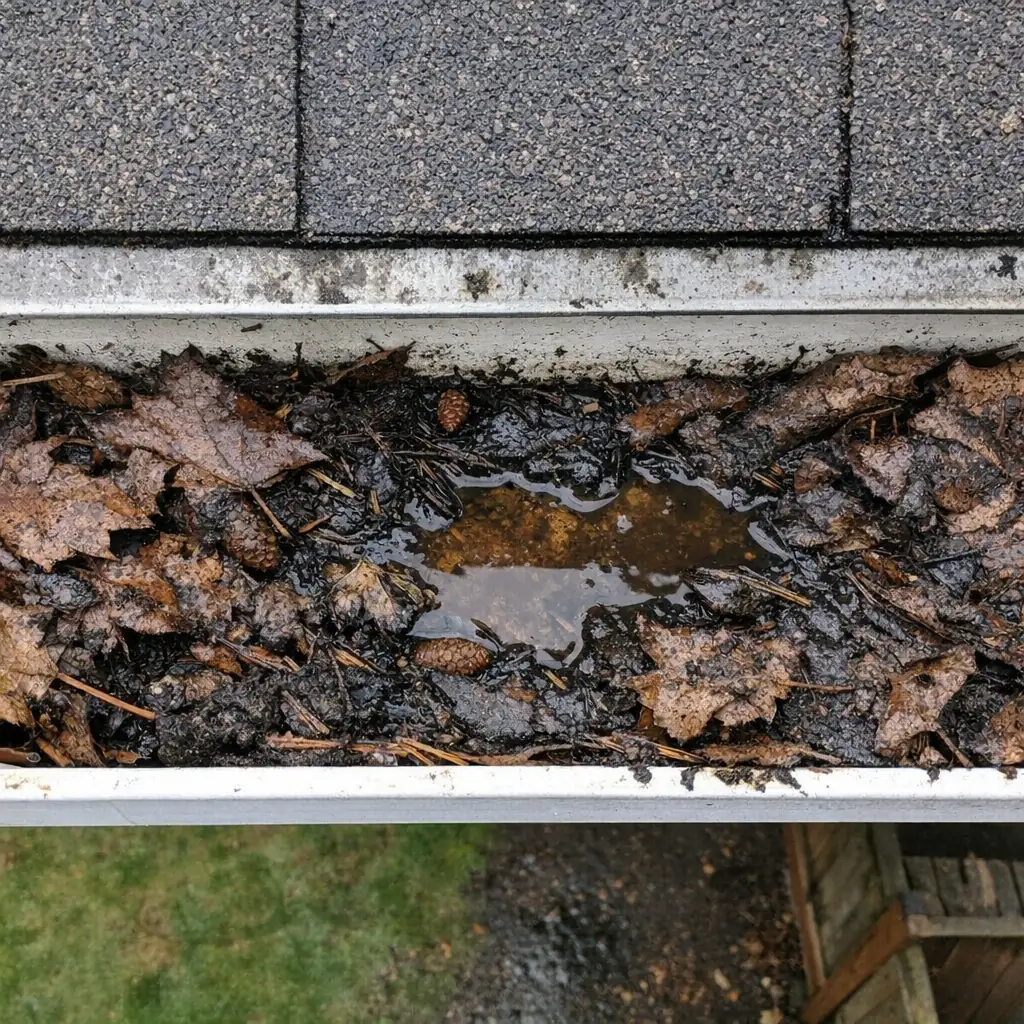
An overflowing gutter isn't an emergency. It's a slow problem that puts water where a house isn't built to take it:
- The roof edge. InspectAPedia says water that misses or backs out of a gutter can get into the soffits and eaves and rot them.
- The foundation. State Farm puts it simply: water overflowing the gutters typically runs down next to the foundation. The EPA's moisture guidance tells homeowners to clean and repair gutters regularly and to keep water from collecting around the foundation. Water pooling there is likely to find its way into a basement or crawl space, per InspectAPedia.
- The gutter itself. InspectAPedia notes that the weight of wet debris, standing water, or ice makes gutters sag, which makes them drain worse, and can pull them off the house.
If you have moss on the roof, it adds to the load: what comes off the shingles ends up in the gutters. I covered that in the roof moss article.
When and how often should gutters be cleaned around Puget Sound?
Seattle Public Utilities advises cleaning gutters and downspouts at least twice a year and inspecting them regularly for leaks or damage. King County's Take Winter by Storm program has called clear gutters the number one thing to do before storm season.
If you only do it once, do it after the leaves have come down and before the heaviest winter rain. Homes under tall trees usually need it more often, and that includes evergreens. WSU Extension describes seasonal needle loss on conifers such as western redcedar as natural, so a house under firs and cedars fills its gutters with needles even with no maple in sight.
What does a professional gutter cleaning involve?
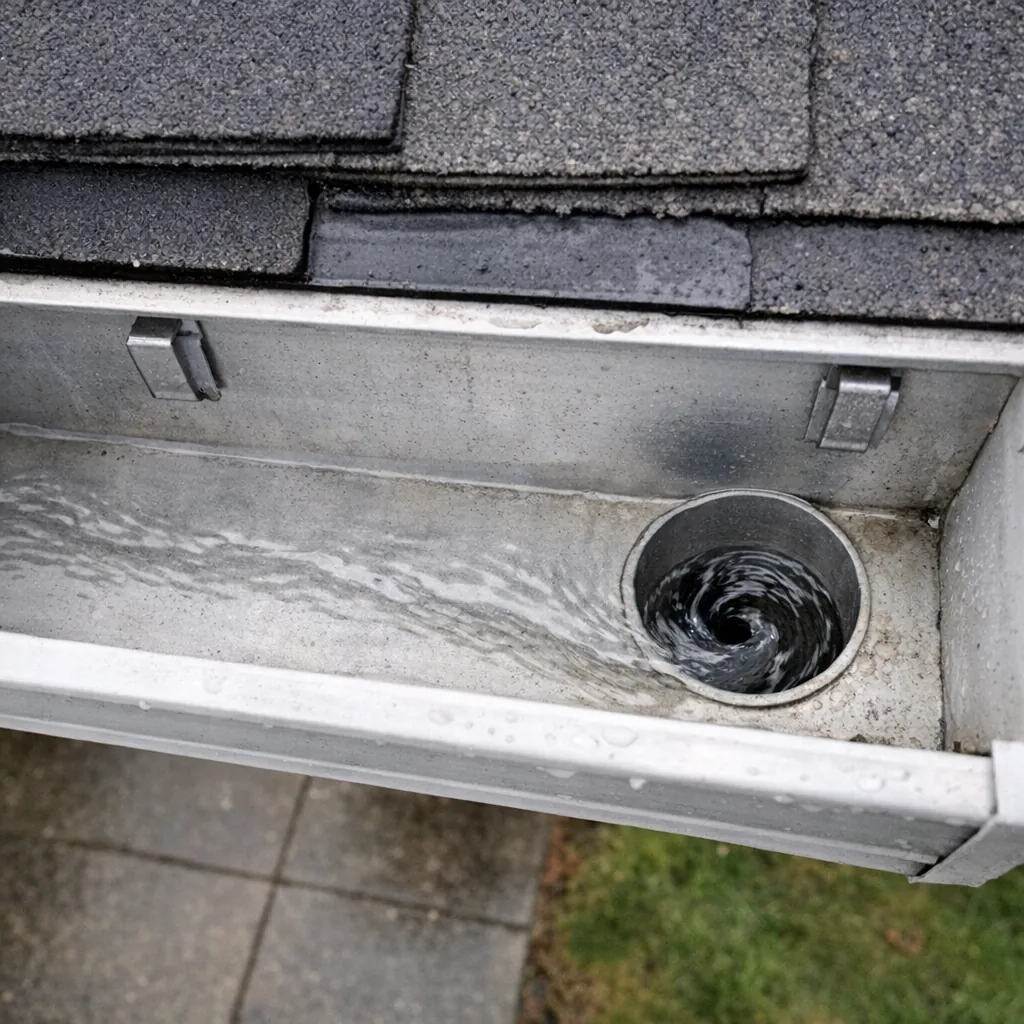
With FixerUp, a gutter cleaning covers four things:
- Debris removal. Debris, mud, and green mold are cleared by hand from every gutter run the pro can reach, end to end.
- Downspout flush. Each downspout is run with water until it drains cleanly with no overflow.
- Condition check. A visual check of the gutters and downspouts, with notes on anything that needs repair.
- Cleanup. Debris is bagged, your hose is disconnected and the water shut off, and the ground is left as the pro found it.
Two things are not included. If a downspout is clogged so badly that it has to be taken apart to wash it out, that is an extra $75, and the pro asks your permission on site first. And the pro flags damage but doesn't repair it as part of a cleaning.
What does gutter cleaning cost near Seattle?
I can only speak for FixerUp's prices. They're fixed by home size and height, before tax:
- $199 for a home under 3,000 square feet
- $249 for a home of 3,000 square feet or more
- Add $99 for a 3-story home. One-story and 2-story homes have no height charge.
A free in-person inspection comes first, in place of an instant price, if your gutters have screens or guards, if part of a gutter is broken or hanging loose, or if the home is 4 stories or taller.
If the roof needs attention too, a FixerUp roof cleaning already includes a full gutter cleaning in the same visit.
To book, start in the FixerUp app. You answer a few questions and see your price before you book. We currently serve the Seattle Metropolitan area.
What can I safely do myself, and what should I skip?
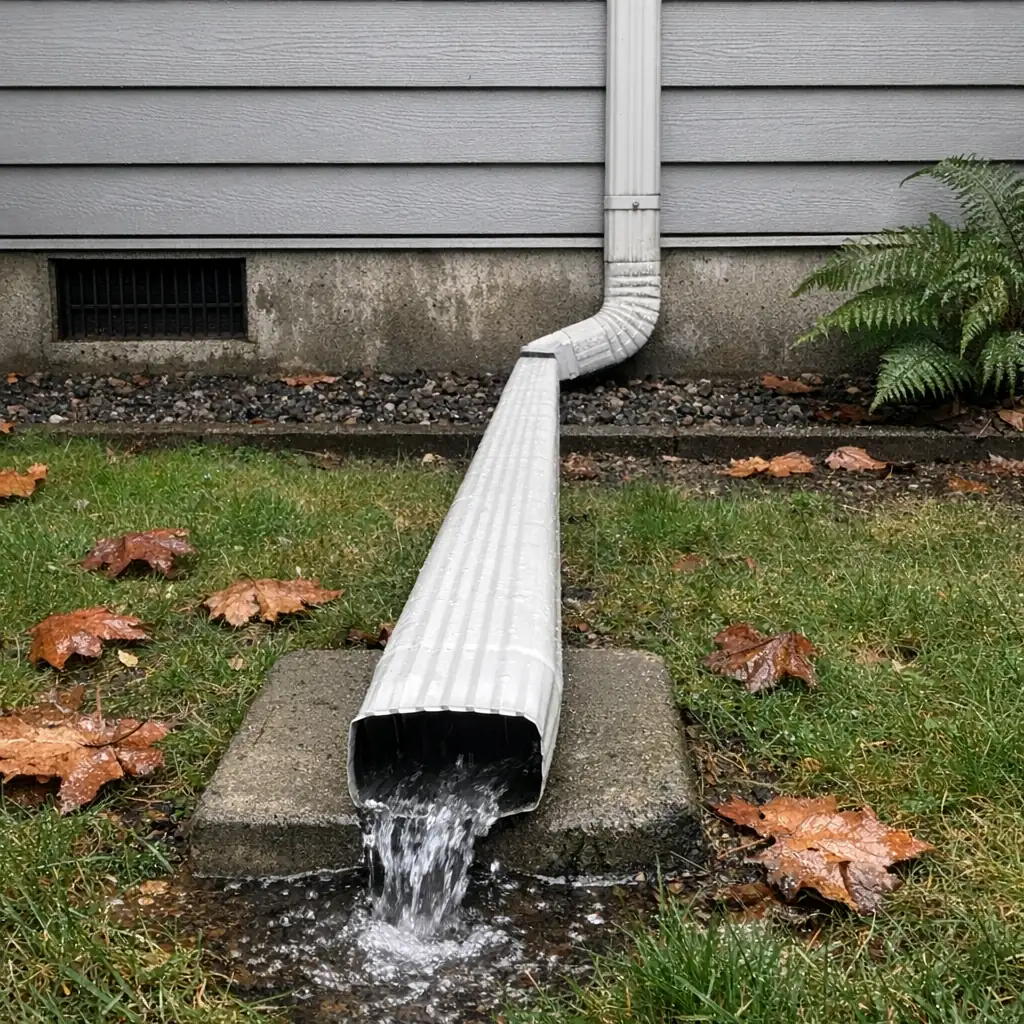
From the ground, plenty:
- Watch your gutters in the rain once each fall and note where they spill.
- Check where the downspouts empty. Seattle Public Utilities says to direct downspout flows at least 5 feet away from your foundation, without sending them onto a neighbor's property.
- Keep the bottom of each downspout clear of leaves.
Going up a ladder is a different decision. If you do, Washington's Department of Labor & Industries gives the basics: set the ladder 1 foot out for every 4 feet up, on stable footing that can't slip, keep three points of contact, and never reach sideways past the side rails. Stay at least 10 feet from power lines.
What I'd skip: second-story gutters, working from the roof, and any ladder work in rain or wind. Those are my cautions, not a rule from a source.
Quick answers
My gutters are clean but still overflow. Why?
Usually size, slope, too few downspouts, or a roof valley dumping water in one spot. Cleaning won't change those.
Can you clean gutters that have guards or screens?
A FixerUp pro looks at them in person first, at no charge, and the job is quoted after that visit.
How often should gutters be cleaned in the Seattle area?
At least twice a year, per Seattle Public Utilities. Homes under tall trees usually need it more often.
Is gutter cleaning included with a roof cleaning?
With FixerUp, yes. Every roof cleaning includes cleaning the gutters and flushing the downspouts in the same visit.
Photos in this article are illustrations, not pictures of FixerUp jobs.